HEAVEN · BAZI
Your Bazi Learning Path
You have discovered your Day Master. Now explore the other layers that add context to it and build a more complete picture of your Bazi.
Begin with the common YFP foundation—Bazi, Feng Shui, awareness and free will—continue through the Four Pillars, Day Master, Five Elements, Ten Gods and Luck Pillars, then bring that awareness into conscious action through intention.
Your Bazi Learning Path
Begin with the common YFP foundation—Bazi, Feng Shui, awareness and free will—continue through the Four Pillars, Day Master, Five Elements, Ten Gods and Luck Pillars, then bring that awareness into conscious action through intention.

Article 1
BAZI + FENG SHUI
Bazi vs Feng Shui: What's the Difference?
Bazi and Feng Shui are two ancient systems that look at different aspects of our lives — one through birth and time, the other through our environment.
Read Article →

Article 2
BAZI + FENG SHUI
Do We Really Have Free Will? A Bazi and Feng Shui Perspective
Do we really make free choices, or are our decisions shaped by influences we do not recognize? Explore the YFP perspective on Bazi, Feng Shui, awareness, free will and conscious action.
Read Article →

Article 3
BAZI
What Is Bazi? The Four Pillars of Destiny Explained
Discover what Bazi is and how the Four Pillars, Day Master, Five Elements, Ten Gods and Luck Pillars work together to reveal the energetic patterns that accompany you through life.
Read Article →

Article 4
BAZI
What Is a Day Master in Bazi? A Beginner's Guide
Learn what a Day Master is in Bazi, how to find yours, the 10 possible Day Masters, and how the Five Elements, Ten Gods and wider Four Pillars chart add context.
Read Article →
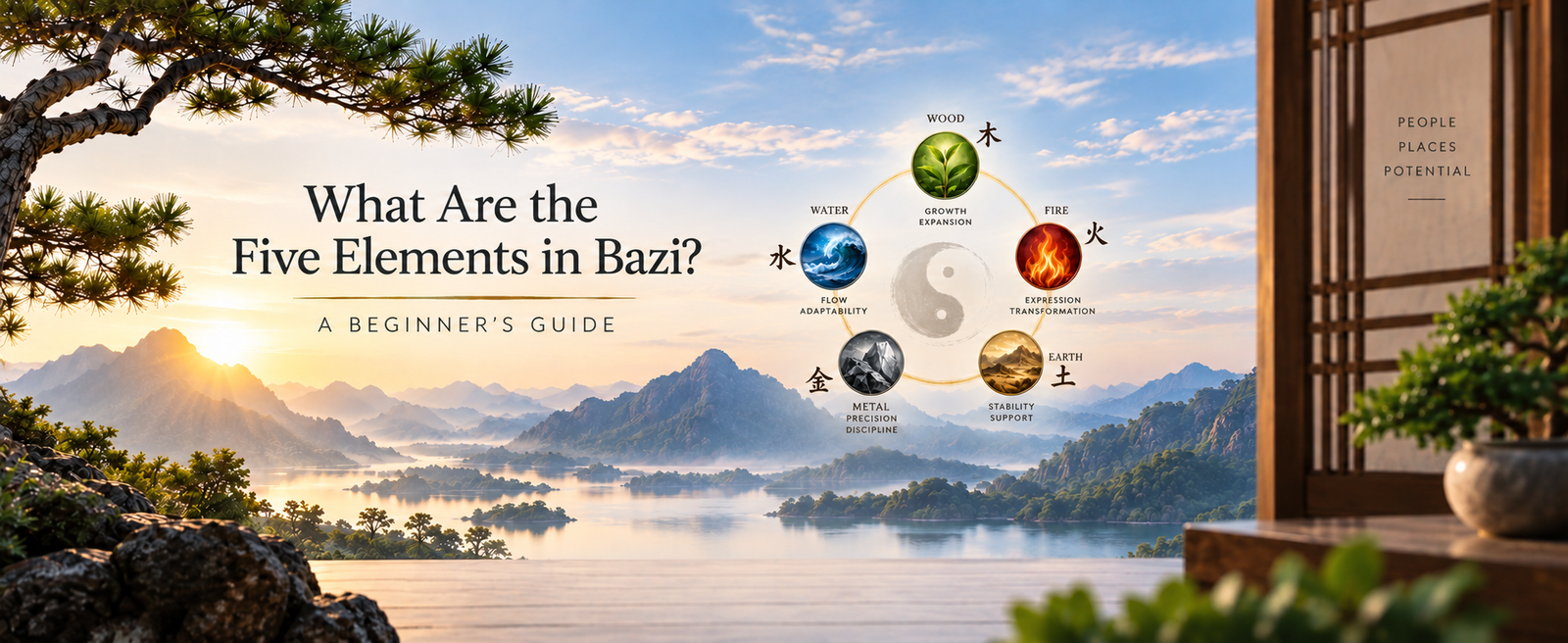
Article 5
FENG SHUI + BAZI
What Are the Five Elements in Bazi? A Beginner's Guide
The Five Elements are a common energetic language connecting Bazi and Feng Shui. Discover how Wood, Fire, Earth, Metal and Water interact, how they shape your Bazi chart, and how the same principles help us understand the energy of our environment.
Read Article →
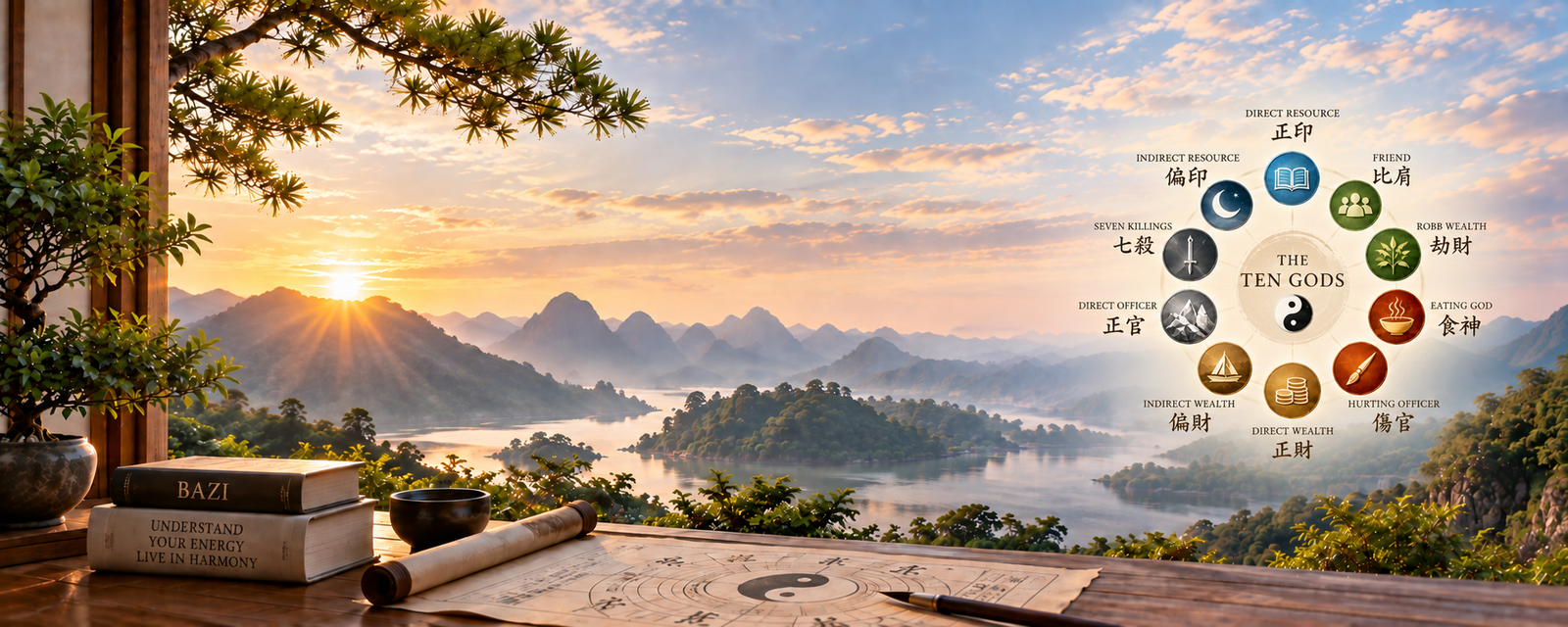
Article 6
BAZI
What Are the Ten Gods in Bazi? A Beginner's Guide
The Ten Gods are one of the most important systems in Bazi. Discover how the relationships between your Day Master and the Five Elements reveal different ways of receiving support, expressing yourself, creating wealth, relating to others and responding to responsibility and challenge.
Read Article →
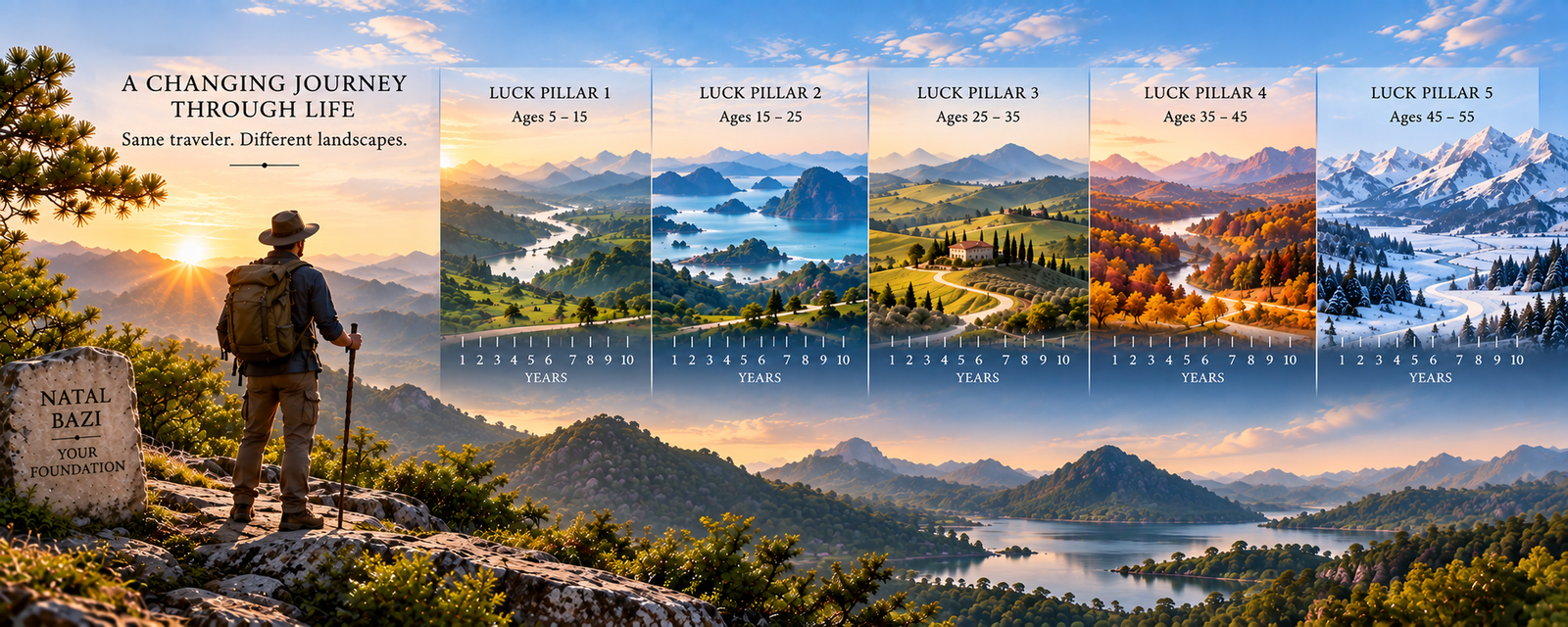
Article 7
BAZI
What Are Luck Pillars in Bazi? A Beginner's Guide
Luck Pillars reveal how the energetic environment surrounding your natal Bazi changes through different periods of life. Discover how these 10-year cycles interact with your Day Master, Five Elements, Ten Gods and individual years.
Read Article →

Article 15
BAZI + FENG SHUI
The Power of Intention: From Awareness to Conscious Action
Awareness can help us recognize the influences acting upon us. But what gives conscious action direction and power? Explore the YFP perspective on intention and how it can influence the outcome of our actions.
Read Article →
Go Beyond Reading
The YFP blog explains the concepts. Our interactive tools help you explore them in relation to yourself, your goals and your environment.
Explore the YFP Tools →
