
A Money Tree is considered lucky.
A bronze statuette is made of metal, so it should bring strong Metal energy.
A singing bowl is also made of metal, so perhaps the two pieces are energetically similar.
Or are they?
When we use objects in Feng Shui, it is tempting to classify them quickly.
A plant is Wood.
A metal statue is Metal.
A red object is Fire.
A blue object is Water.
These associations can be useful, but real objects are often more complex.
An object has a material. It has a shape. It has a color. Each of these characteristics can contribute to its elemental nature. And when several elements are present, they can interact through the relationships of the Five Elements.
There is another question too:
Where are you going to place it?
A decorative piece that provides useful energy in one area of the home may be much less appropriate in another. And when several items are placed together, the energetic balance of the group may change again.
This is why, at Your Feng Shui Partner, we don't simply ask:
“What element does this object represent?”
We ask:
“What elemental energy does this object actually bring—and is that the energy we want in this particular place?”
Why Do Objects Matter in Feng Shui?
When we analyze a home, we may identify an area where a particular elemental influence would be useful.
We can then use decorative pieces to help introduce or reinforce that energy.
But this creates a practical problem:
Which item should we choose?
Suppose you want to reinforce Metal energy. Should you simply find something made of metal?
Not necessarily.
The material is important, but it is only one characteristic of the piece. Its shape and color may introduce other elemental influences that reinforce—or weaken—the effect you are trying to create.
So before using an item as a Feng Shui adjustment, it is useful to understand the energy associated with the item itself.
Material, Shape and Color: Three Parts of the Same Object
At Your Feng Shui Partner, our Object Energy analysis considers three principal physical characteristics:
Material
Shape
Color
Each can contribute to one or more of the Five Elements:
Water • Wood • Fire • Earth • Metal

This means an object does not necessarily belong entirely to a single element.
For example, a decorative piece may have:
Material → Metal
Shape → Fire
Color → Metal
Calling it simply a “Metal object” misses part of the picture.
The elemental influences need to be considered together.
The Five Elements Don't Simply Sit Beside One Another
There is another reason this matters.
The Five Elements have relationships with one another.
They can support one another through the Creative Cycle, and they can regulate or weaken one another through the Controlling Cycle.
So if an object contains several elemental influences, we don't necessarily want to simply add the numbers together and stop there.
We also want to consider:
How do these elements interact?
This is why the YFP Object Energy tool distinguishes between the initial elemental composition—the Plain Total—and the resulting Mutated Energy after the elemental relationships have been taken into account.
The purpose is not to claim that the energetic nature of an object can be measured with absolute scientific precision.
It is to provide a structured Feng Shui method for comparing items and understanding how their physical characteristics may influence the elemental energy we are introducing into a space.
Example 1: Is a Money Tree Always Auspicious?
Let's start with something many people immediately associate with good Feng Shui: the Money Tree.
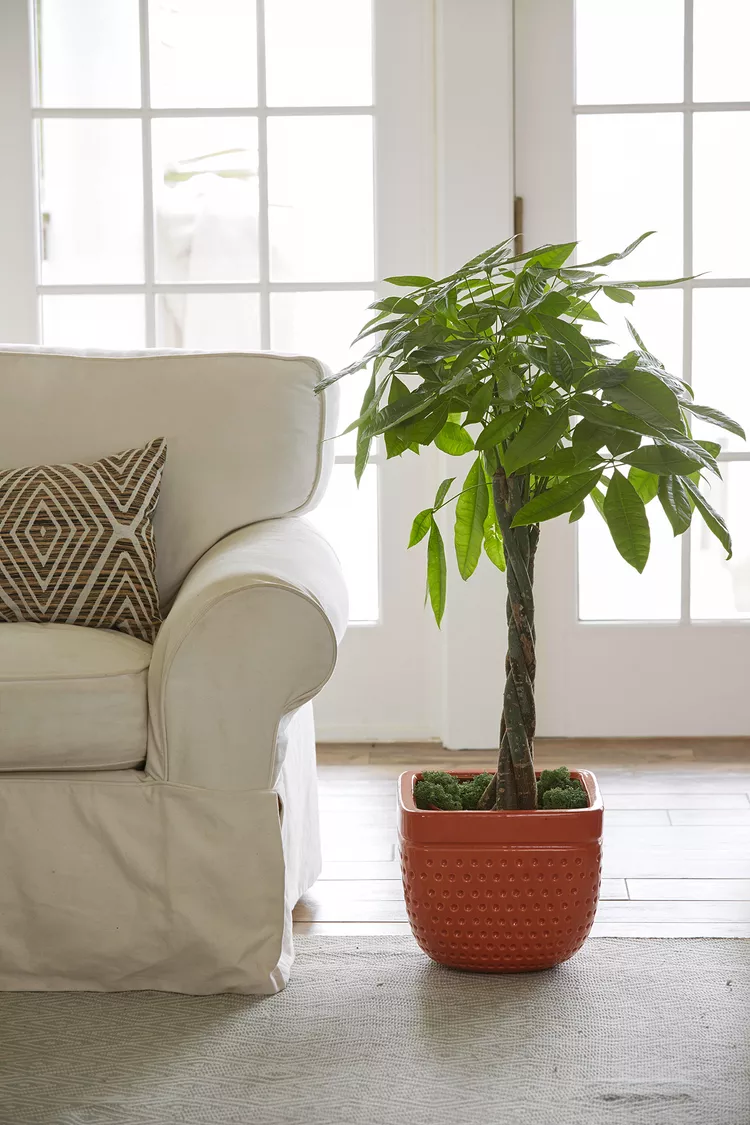
The name itself suggests prosperity and good fortune.
So it might seem reasonable to think:
“A Money Tree is auspicious. I can put one in my home to attract good luck.”
But that leaves out an important question:
What energy does the Money Tree actually bring?
When we analyze our example using the YFP Object Energy method, the result is particularly clear:
Money Tree — Object Energy
Material → Wood: 2
Shape → Wood: 2
Color → Wood: 2
Plain Total → Wood: 6
Mutated Energy → Wood: 6
Main Element → Wood
Element Power → Strong
Energy Level → Very good
So this is indeed a powerful item—but more specifically, it is a powerful Wood item.
The Same Money Tree Is Not Equally Appropriate Everywhere
Now we can ask the question that really matters:
Where are we going to put it?
If we want to reinforce Wood energy in an appropriate area, the Money Tree can be an excellent choice.
For example, the East is associated with the Wood element. A strong Wood influence can therefore be coherent with an intention to support Wood energy there.
But suppose we place exactly the same Money Tree in the West, associated with Metal.
Now the elemental relationship is different.
Metal controls Wood.
The Money Tree hasn't changed.
Its symbolic reputation hasn't changed.
But the energetic context of its placement has.
This illustrates an important Feng Shui principle:
A “lucky object” is not necessarily lucky everywhere. Its energetic nature needs to be considered together with the energy of the place where it is used.
So perhaps a Money Tree isn't always a “money tree” after all.
Example 2: A Heavy Bronze Statuette Must Be a Powerful Metal Object... Right?
Now consider this beautiful, heavy bronze statuette.
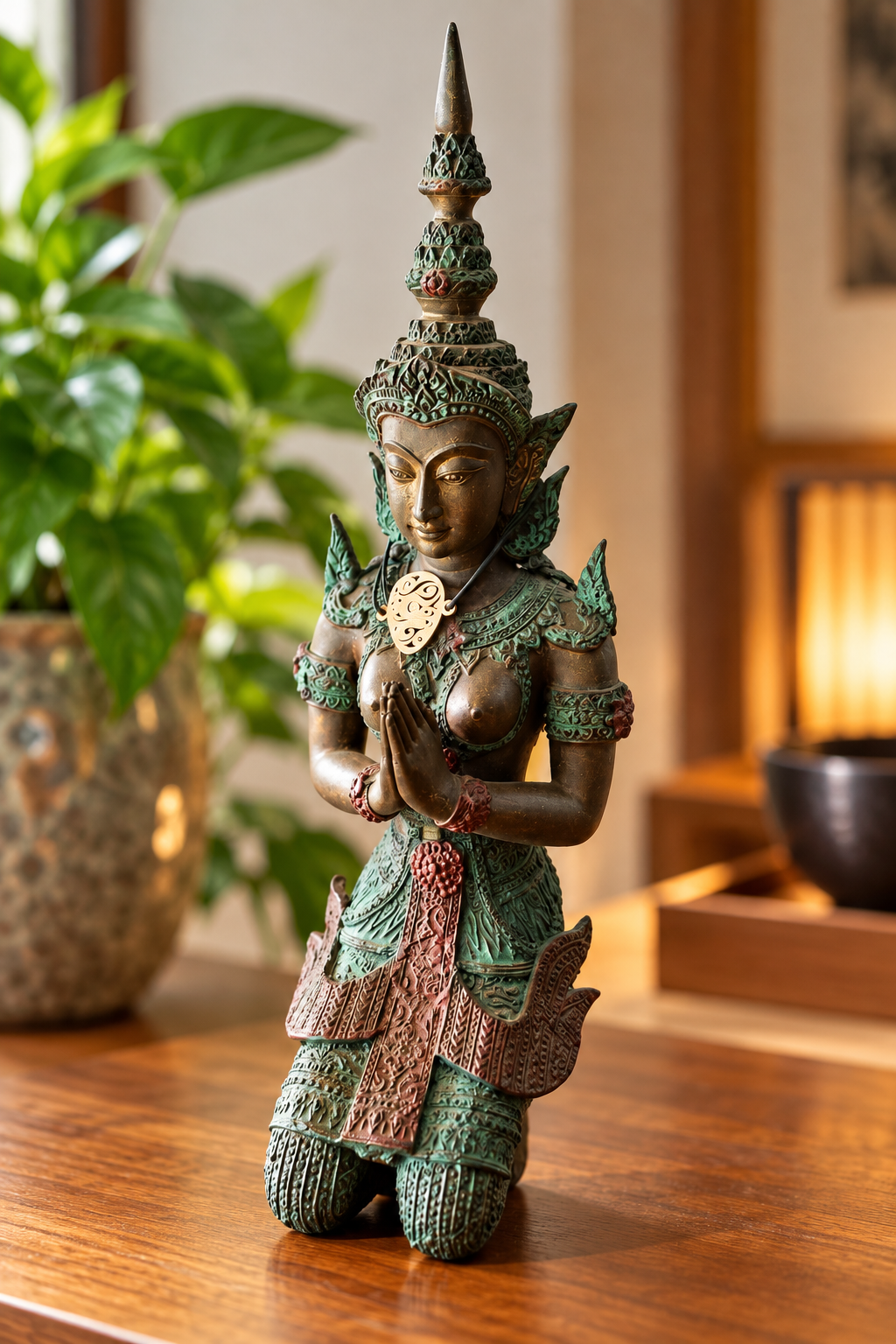
At first glance, it seems like an obvious Metal piece.
It is made from metal. It feels substantial.
If we wanted to reinforce Metal energy somewhere in the home, we might naturally think this would be a powerful choice.
But look more carefully at its form.
The statuette contains many pointed and upward-reaching shapes. Its headdress is pointed. Many decorative details are pointed. Even the positioning of the hands contributes to the character of its shape.
Within the Five Element associations used in our analysis, these characteristics introduce Fire through the shape of the piece.
Bronze Statuette — Object Energy
Material → Metal: 2
Shape → Fire: 2
Color → Metal: 2
Plain Total
Fire: 2
Metal: 4
Mutated Energy
Fire: 1.5
Metal: 3
Main Element → Metal
Element Power → Good
Energy Level → Weak
If we stopped at the Plain Total, Metal would still appear comfortably dominant.
But Fire and Metal interact.
Fire controls Metal.
Once that relationship is included in the calculation, the Metal influence is reduced from 4 to 3.
The statuette remains predominantly Metal, but it is not nearly as powerful a Metal enhancer as its material alone might have suggested.
This gives us an important lesson:
The material tells us what a piece is made of. It does not necessarily tell us the full energy that it brings into a space.
Compare It With a Singing Bowl
Now consider a large singing bowl.
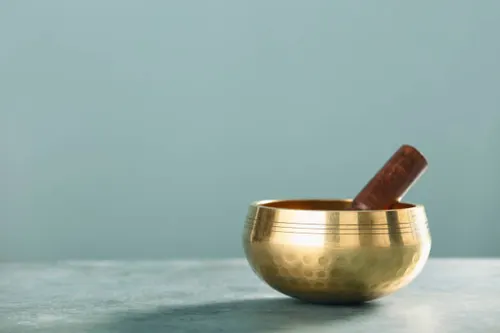
Again, it is a Metal piece—but this time its different characteristics work together rather than against one another.
Singing Bowl — Object Energy
Material → Metal: 2
Shape → Metal: 2
Color → Metal: 2
Plain Total → Metal: 6
Mutated Energy → Metal: 6
Main Element → Metal
Element Power → Strong
Energy Level → Very good
So if our objective is specifically to introduce strong Metal energy, the singing bowl is a much more coherent choice.
Both pieces are made from metal, but energetically they are not equivalent.
Bronze Statuette vs Singing Bowl
| Bronze Statuette | Singing Bowl | |
|---|---|---|
| Material | Metal | Metal |
| Shape | Fire | Metal |
| Color | Metal | Metal |
| Final Metal | 3 | 6 |
| Element Power | Good | Strong |
| Energy Level | Weak | Very good |
This is exactly why simply asking:
“What is this object made of?”
isn't always enough.
Material + Shape + Color + Elemental Interactions
Strong Energy Does Not Mean Good Placement
There is another distinction worth making.
When our analysis describes a piece as having strong or very good energy, that does not mean:
“This object is good everywhere.”
Those results describe the energetic characteristics of the item. Placement is a separate question.
A powerful Metal piece is useful when strong Metal is what we want to introduce.
If Metal is inappropriate for the area or conflicts with what we are trying to achieve, making the Metal object even stronger doesn't make the placement better.
What energy do we want in this area?
↓
What energy does the item provide?
↓
How strong is that energy?
↓
Does it support what we are trying to achieve?
But Objects Rarely Live Alone
So far, we have analyzed individual pieces.
But look around your own home.
Objects are rarely completely isolated.
A statue may sit on a piece of furniture. A decorative item may sit beside another one. Several pieces may occupy the same table, shelf or Feng Shui area.
And this raises another question:
What happens when different elemental energies are brought together?
At YFP, the Object Energy tool can also analyze a group of objects.
This is important because the elemental effect of the combination may be very different from the effect of its strongest individual item.
Example 3: What Happens When a Metal Statuette Is Placed on Wood?
Imagine that we choose our bronze statuette because we want to introduce Metal energy into a particular area of the house.
We then place it on a wooden pedestal for display.
That seems perfectly ordinary.
But energetically, we have not placed one item in the area.
We have created an association of two items.
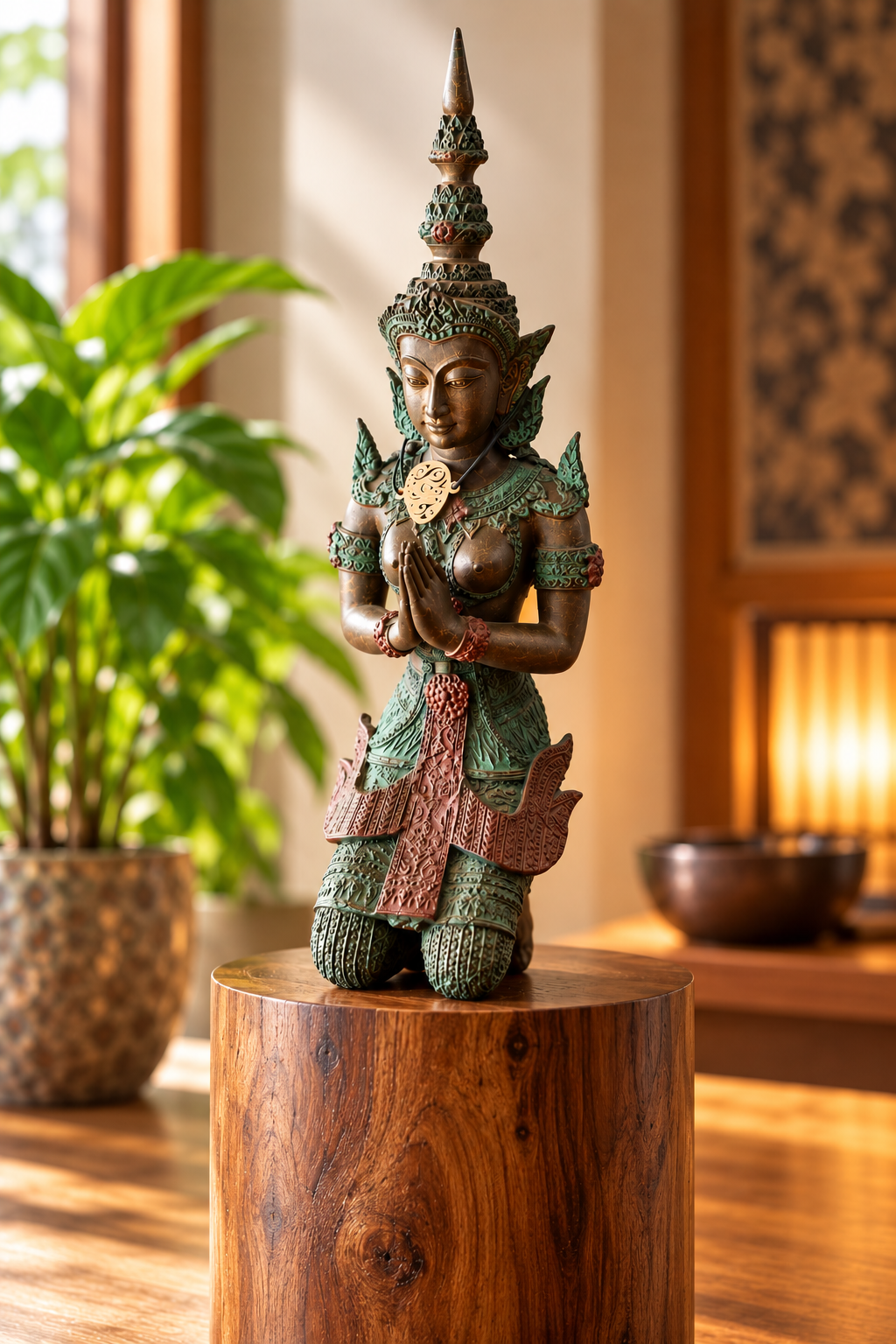
The wooden support is itself a very strong Wood influence:
Wooden Support
Wood → 6
Main Element → Wood
Element Power → Strong
Energy Level → Very good
Our statuette, analyzed individually, contains:
Bronze Statuette
Fire → 1.5
Metal → 3
Main Element → Metal
Element Power → Good
Energy Level → Weak
Now let's analyze them together.
After the elemental interactions within the group are calculated, the result becomes:
Statuette + Wooden Support
Wood → 1.5
Fire → 1.0
Metal → 0.5
Main Element → Wood
Element Power → Weak
Energy Level → Very weak
The main element of the combination is no longer Metal.
It is Wood.
The statuette we deliberately selected to provide Metal energy has become part of a combination in which Metal is reduced to only 0.5.
The supporting furniture has fundamentally changed the energetic result.
Choosing the right Feng Shui item is not enough. We also need to consider what we place it on, beside or together with.
This is particularly important when a decorative piece is being used deliberately as a Feng Shui adjustment.
If our intention is to strengthen Metal in a particular area, choosing a Metal piece and then displaying it on a strong Wood support may considerably reduce the effect we were trying to create.
Three Common Assumptions—and Why They Can Be Misleading
“It's an auspicious object, so it must be good here.”
The Money Tree shows why that is too simple.
Its symbolic association with prosperity does not change the fact that it is fundamentally a strong Wood influence.
Placement matters.
“It's made of metal, so it must strongly reinforce Metal.”
The bronze statuette shows why material alone is insufficient.
Its Fire shape reduces the Metal strength we might have expected from its material and color.
Shape and color matter too.
“I've chosen the right object, so the Feng Shui adjustment should work.”
The statuette and wooden support show why this is not necessarily true either.
Nearby or supporting items can introduce other elemental influences and alter the resulting balance.
The energetic combination matters.
So How Should You Choose a Feng Shui Object?
Instead of beginning with:
“Which lucky object should I buy?”
I would begin with a different sequence of questions.
1. What energy is appropriate for this area?
First determine what elemental influence you are trying to support.
2. What energy does the item actually provide?
Look beyond symbolism and consider its material, shape and color.
3. How do those elements interact?
If several elements are present within the piece, consider their Creative and Controlling relationships.
4. How strong is the resulting energy?
An item can remain predominantly Metal, Wood or another element while providing that energy with very different levels of strength.
5. What else is around it?
If the item forms part of a group, consider the energetic combination rather than evaluating every piece independently.
Only then can we ask:
“Is this object a good choice for what I am trying to achieve here?”
What About the Symbolic Meaning of an Object?
Physical elemental analysis is not the only consideration in Feng Shui.
Objects can also carry strong symbolism.
An image, animal, religious object, family possession or culturally meaningful symbol may have significance that cannot be reduced simply to material, shape and color.
This is important.
The YFP calculation is therefore a tool for analysis, not a claim that every dimension of an object's Feng Shui significance can be reduced to numbers.
Its purpose is to give us a structured way of examining the elemental contribution of an item.
Symbolism, context and informed judgment still matter.
The objective is not to replace judgment. It is to make that judgment better informed.
From Generic Feng Shui Advice to a More Precise Question
Many Feng Shui recommendations understandably use simple associations:
Plants → Wood
Red → Fire
Ceramics → Earth
Metal objects → Metal
Blue or black → Water
These associations are useful starting points.
But when we are deliberately choosing an item to modify the elemental balance of a particular area, we can go further.
Instead of asking:
“Is this a Metal object?”
we can ask:
“How much Metal energy does this object actually provide after its material, shape, color and elemental interactions are considered?”
Instead of asking:
“Is a Money Tree lucky?”
we can ask:
“Is strong Wood energy appropriate in the place where I want to put it?”
And instead of asking:
“Is this individual item suitable?”
we can also ask:
“What happens when I combine it with the other objects already there?”
These are much more useful Feng Shui questions.
Calculate the Feng Shui Energy of Your Own Objects
This is why we created the Check Object Energy tool at Your Feng Shui Partner.
It allows you to analyze an object according to its:
Material
Shape
Color
and examine its elemental composition across:
Water • Wood • Fire • Earth • Metal
The calculation then helps you evaluate:
Plain Total
Mutated Energy
Main Element
Element Power
Energy Level
You can also combine several objects to examine the elemental energy of the group.
The purpose is practical:
Before using an object to reinforce a Feng Shui area, understand what energy you are actually introducing into that space.
And it works in the other direction too.
If objects are already present in an important area of your home, you can analyze them to see whether their elemental influence is consistent with what you want that area to support.
One Final Thought
Feng Shui objects are sometimes presented almost like prescriptions:
Put this object here.
Use this color there.
Buy this symbol for prosperity.
But an object does not become appropriate simply because it has a fortunate name or because one of its characteristics corresponds to a particular element.
A Money Tree is still strongly Wood.
A bronze statuette can contain enough Fire shape to weaken the Metal energy we expected from it.
And even a carefully chosen individual piece can behave very differently once it becomes part of an elemental combination.
So before asking:
“Which Feng Shui object should I place here?”
ask one question first:
“What energy am I actually bringing into this space?”
Because choosing an object is not only about what the object represents.
It is about the energy it brings—and whether that energy belongs where you are placing it.